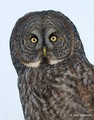
![]() The Great Gray Owls of
Northern Minnesota
During the winter of 2004/2005, Great Gray Owls descended upon Northern
Minnesota from the boreal forests of Canada in unprecedented numbers.
This phenomenon, which occurs periodically, but unpredictably, provided
a unique opportunity for observing and photographing North America's
largest owl. Images of the Great Gray Owl in this winter habitat will
be presented and the challenges faced by the photographer in capturing
these images will be discussed. Click Here
to view images.

|
![]() The Bald Eagles of Homer, Alaska There are reported to be
between 30,000 and 50,000 Bald Eagles in Alaska. So what is special
about 150-200 Eagles found on the Homer Spit each Winter? It's all
about proximity. Nowhere else can you view and photograph perched and
flying Bald Eagles as closely as is possible in Homer. This has
attracted both photographers and controversy. The photographer will
discuss the lives of Bald Eagles in general and the challenges,
photographic and otherwise, facing the photographer who wants to to
experience the Bald Eagles of Homer, Alaska. Click Here to view images.
|
![]() Birds of the Rio Grande Valley, Texas Texas boasts more bird
species than any other state in the country. This is particularly true
each Spring when many species briefly travel north of the border.
Birds in the Rio Grande Valley are attracted to any water or food in
this arid desert environment. As a result, photography from
blinds
located near water and food can be very productive. The
photographer will present images of the wide variety of birds found in
the area as well as discuss some of the ins and outs of photographing
from a blind. Click Here
and Here to view images.
|
![]() Birds of Tandayapa Valley, Ecuador
Ecuador is one of the most
bio-diverse countries on earth, with over 1700 bird species, of which
131 are Hummingbirds. The Tandayapa Valley, located in the Andes
northwest of Quito, is renowned as a birding and hummingbird
photography location. The photographer will duscuss bird
photography in the high altitude Andean cloud forest and the
photographing of hummingbirds using multi-flash set-ups, also referred
to as "outdoor studios". Click Here
to view images.
|
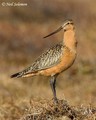
![]() Birds of Nome, Alaska Arctic Terns travel
12,000 miles to reach their breeding grounds in the tundra surrounding
Nome. And, only here can one see shore birds in their full breeding
plumage or Pelagic species nesting in the tundra before their return to
the oceans. With 18 hours of sunlight and seemingly endless
tundra, finding and photographing birds in Nome during the Alaskan
summer can be both exhausting and exhilarating. The photographer
will present images and discuss the photographing of breeding
birds in their tundra habitat . Click Here
to view images.
|