Red-tailed Hawks
An Unlikely Story of Nature and Technology Existing Side by Side
Or is it?
| Landfills and power
generating facilities
do not often conjur up images of new life. More often it brings
to
mind piles of trash, the smell of decay and clouds of water vapor from
cooling towers. However, for the last
several years, Red-tailed Hawks have defied the odds by nesting
and raising their young in a power generating facility that is located
in
a southern California landfill. |
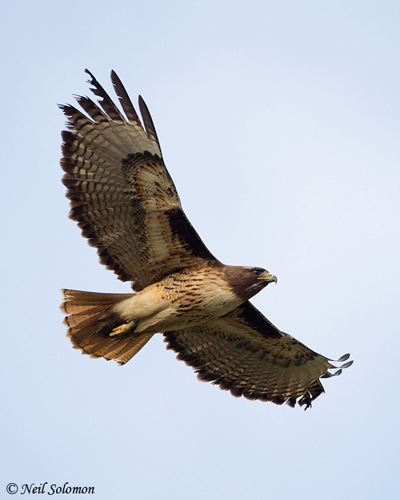 |
Southwestern Light Morph The Red-tailed Hawk is
a large, chunky, short-tailed raptor.
Red-tailed Hawks are perhaps the most common raptor seen across the United States. They can be found in a variety of habitats, from wooded to open, from farmland to urban. |
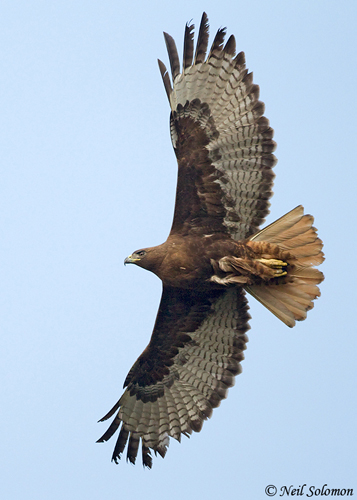
Southwestern Dark
Morph
The Red-tailed Hawk
can be found in a variety of colors from rufous to dark.
Prey species include rodents, small mammals, snakes and the occasional bird. |
 |
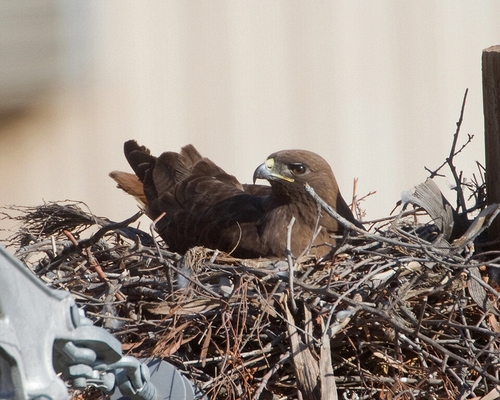 |
4/9/2013 Red-tailed Hawks are monogamous and it is believed they may mate for life. |
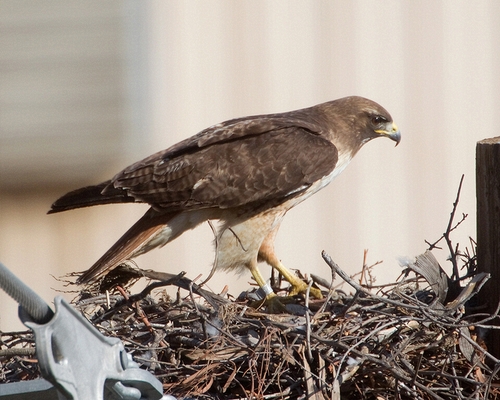
4/9/2013
Eggs are incubated by
both the male and female for 28-35 days.
|
 |
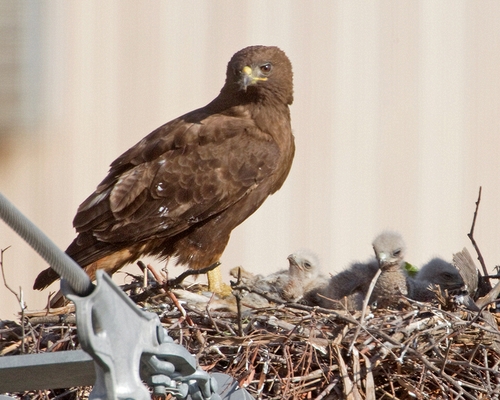 |
4/23/2013 Red-tailed Hawks will usually have one brood per year. |
4/26/2013 The young hawks will
usually stay in the nest for 42-46 days.
|
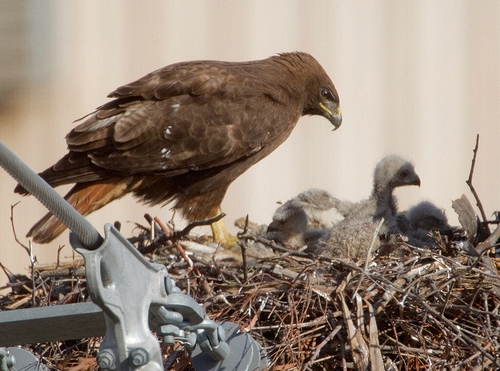 |
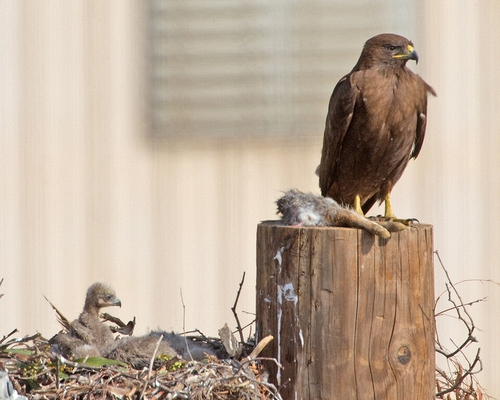 |
4/30/2013 The male and female Red-tail will take turns feeding their young. |
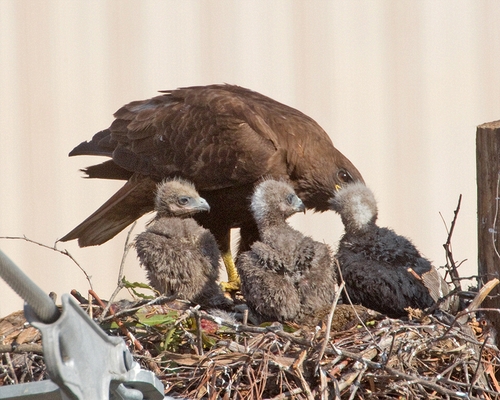
5/1/2013
With constant feeding
throughout the day, the young hawks grow rapidly. But with wing
development yet to come, they are still quite helpless.
|
 |
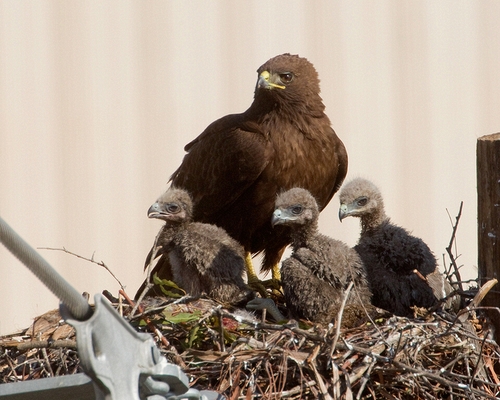 |
5/1/2013 And so the adult Hawks are ever vigilant. |
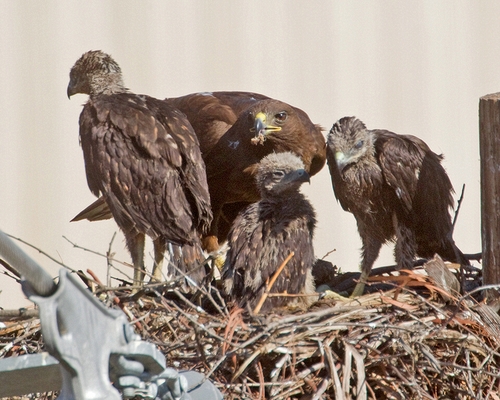
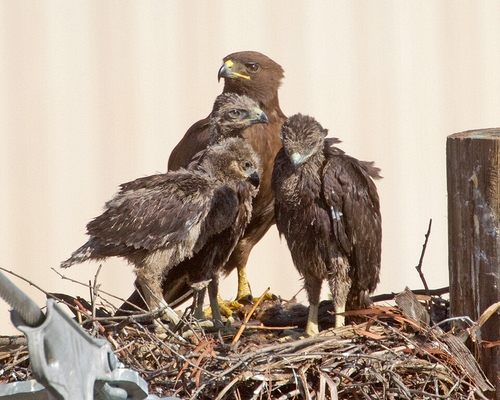
5/14/2013 Although still
incapable of flight, the young hawks become active in the nest,
particularly when their food arrives.
|
 |
 |
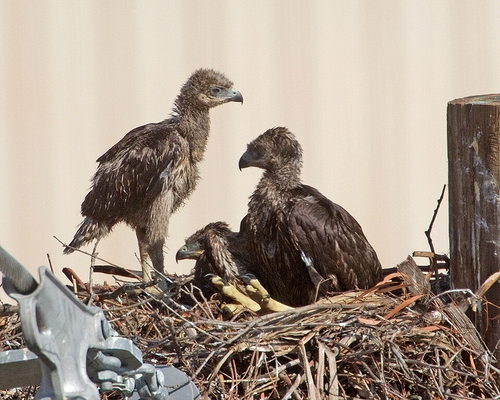
5/14/2013 |
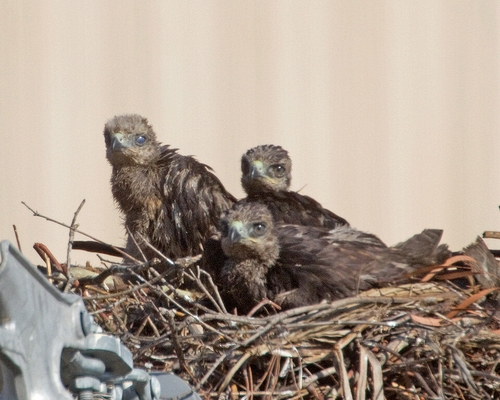
5/15/2013 Although the nest is
relatively large, young hawks at this age easily fill up all the
available space. Still, they huddle together while waiting the return
of their parent with food.
|
 |
 |
5/15/2013 When one of the adult
hawks is near, the young hawks ready themselves for a meal.
|
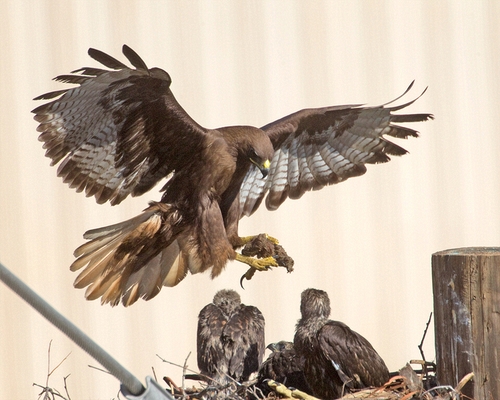
5/15/2013 The adult Red-tail
swoops in with the afternoon catch.
|
 |
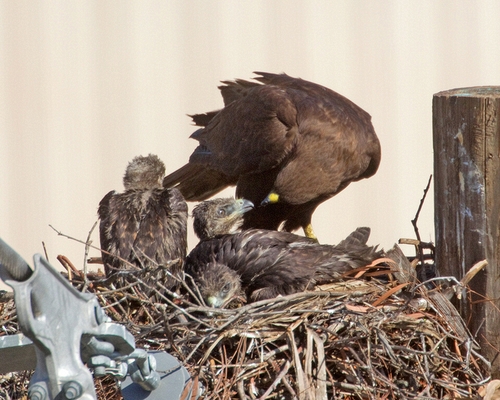 |
5/15/2013 Although the young
hawks are getting close to fledging, the adult hawk still tries to make
sure that each gets his/her share of the food. Having never left the
nest, the young hawks have no idea how to hunt and fend for
themselves.They still have a lot to learn.
|
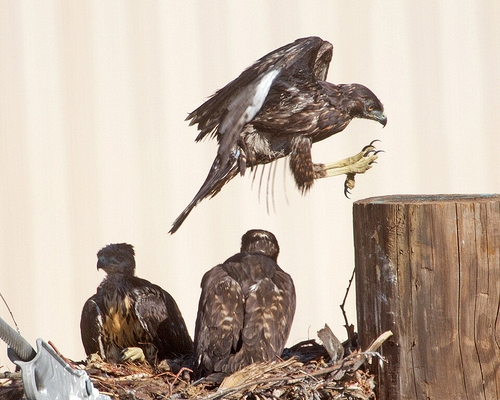
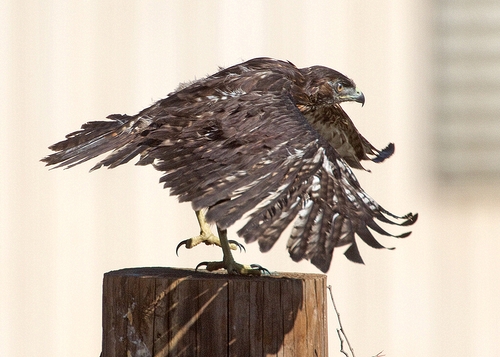
5/29/2013 It's time to spread
those wings and strengthen those muscles. A little landing
practise doesn't hurt.
|
 |
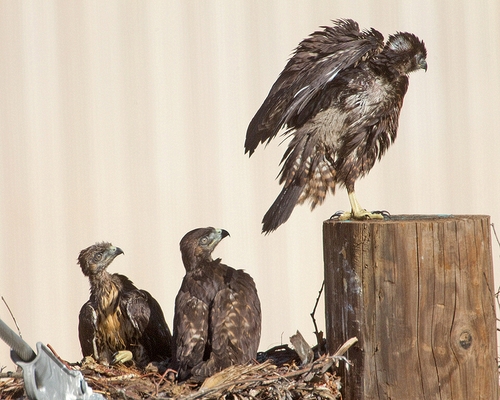 |
5/29/2013 Since the primary
feathers are just beginning to come in, the young hawk cannot go very
far. However, the fledging time is getting near, and the siblings
look on with interest. Their turn is coming too.
|
5/29/2013 Practise, practise,
practise.
|
 |
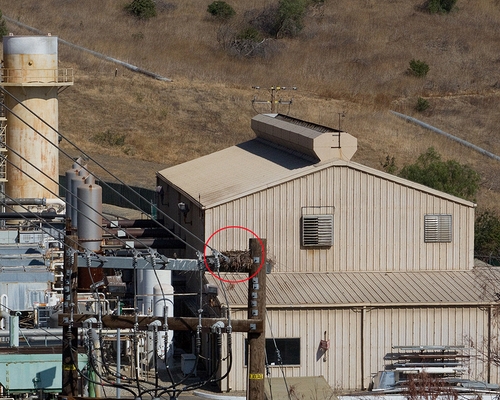 |
6/25/2013 The power generating
facility with the Landfill beyond.
The power generating facility is located in the landfill because decomposing trash produces methane. Methane can be used as a fuel for power generating equipment. Rodents and other small mammals can be found in the landfill because of easy access to the trash. And finally, the Red-tailed Hawks are in the landfill because of the easy access to the abundant rodents and small mammals and a high vantage point for their nest. Seems like the definition of a symbiotic relationship. So, the young hawks have fledged and the empty nest remains on the power line structure. Meanwhile, the young hawks will learn to ride the thermals created by heat rising from the stacks of the generating facility and hunt for rodents and snakes on the landfill hillsides. Red-tailed Hawks will return year after year to the same nest. So, the cycle will be repeated again next Spring. |
About What's New Gallery Order Links Photo Journal
Home