Pileated Woodpeckers
Around the Nesting Hole
Part II
 |
One year
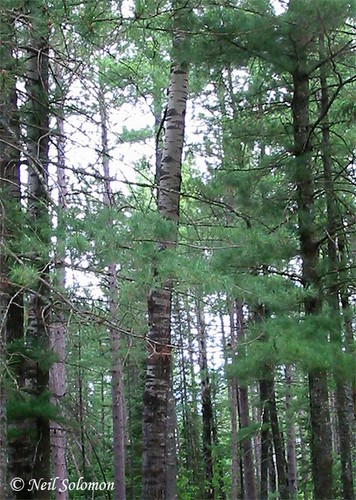
later the Pileated Woodpecker pair has made their nesting hole in a
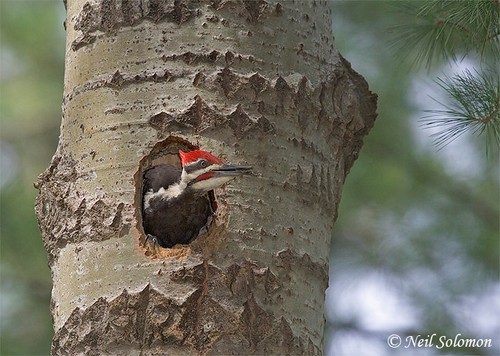
poplar tree about 15 feet east of last year's tree. This hole is about
20 feet off the ground and faces east. Pileated Woodpeckers will often choose to nest near the previous year's hole but typically never in the same hole. Roosting holes can be seen in nearby trees and even in the tree containin the nesting hole. The adults will spend their evenings in these roosting holes after the eggs have hatched. |
 |
The brood
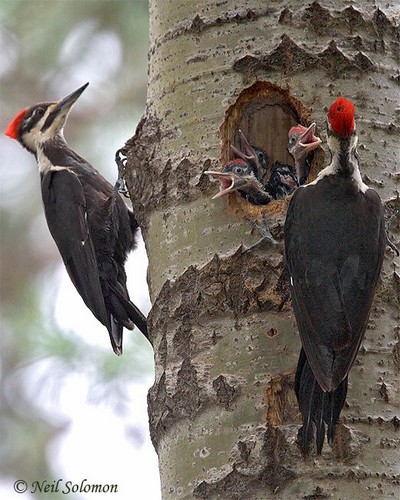
this year numbers three. Although four is the typical number of eggs
produced by Pileated Woodpeckers, this particular pair has produced
clutches of two and three in the last two years. |
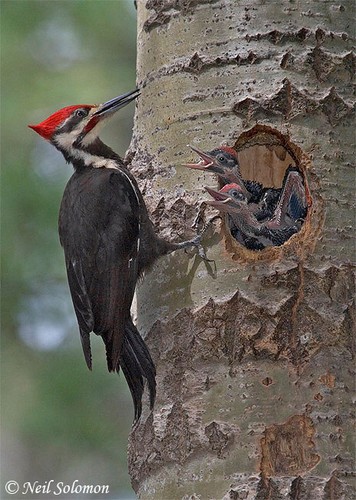 |
The images this year were obtained two
weeks earlier than last year. The babies are visibly smaller and less
developed. Feathers are just now coming in and their vocalizations
consists of soft buzzing or whirrring sounds whenever the adults are
near. They are probably 2-4 weeks from fledging. In this image the male adult is greeted by two of his anxious brood. |
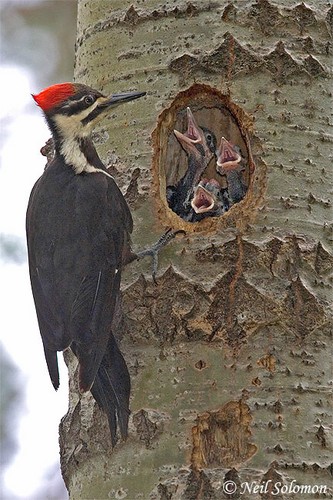 |
The feeding rotation is usually every 45
minutes to 1 hour. In this image three hungry mouths greet the adult
female. |
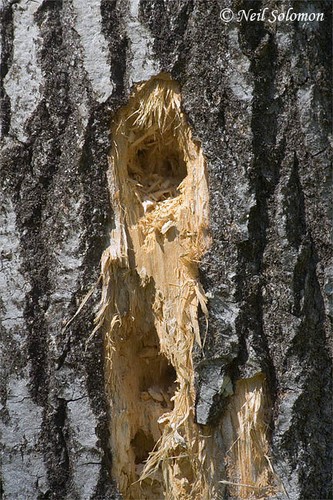 |
As is usual, the adults take turns feeding
the babies regurgitated ants. Many of the surrounding trees show
the obvious results of Pileated Woodpeckers foraging for food. Long
strips of bark have been removed to expose the carpenter ants that
comprise the primary food of the Pileated woodpecker. In some cases
these dead trees have been entirely stripped of their bark. |
 |
Because the babies are smaller at this stage of their growth, the adults will sometimes enter the nesting hole to feed them. |
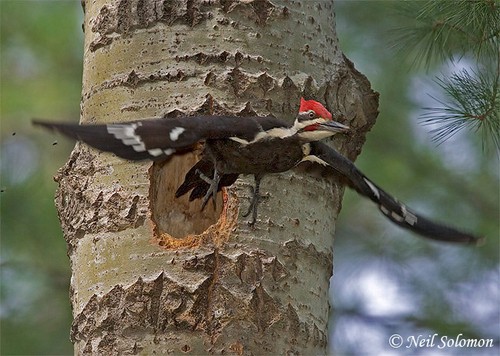 |
As the adults leave the hole to continue their feeding chores, they often can be seen removing excrement and other debris that has accumulated in the nesting hole. |
About What's New Gallery Order Links Photo Journal
Home