Hooded Orioles in San Diego County
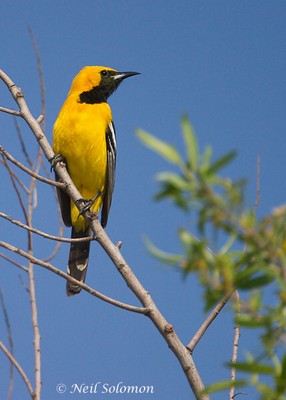
| Of the twenty-four
species of Orioles in the world, ten can be found in the United States.
Orioles are medium-sized birds with relatively long bills and long
tails. Oriole plumage is usually black with yellow or orange. |
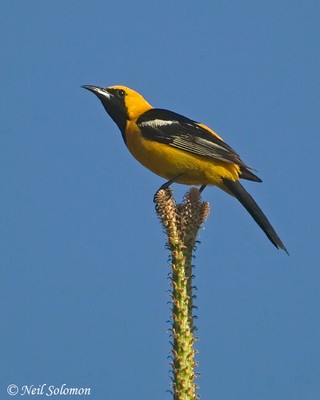
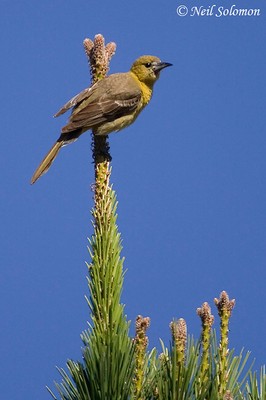
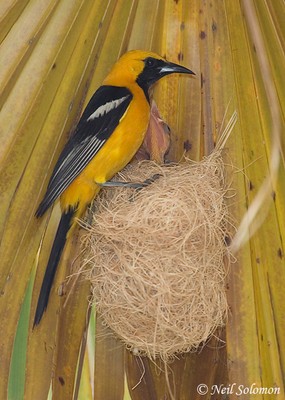
| The Hooded Oriole is
found throughout the southwest US, from Texas to California. The adult
male has a black face and throat and a yellow to orange body with black
wings. Females are uniformly yellowish in color. In California, the
male Hooded Oriole is yellow. |
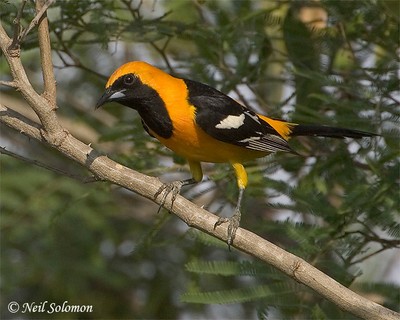
| The Texas subspecies
tends to be more orange in color. |
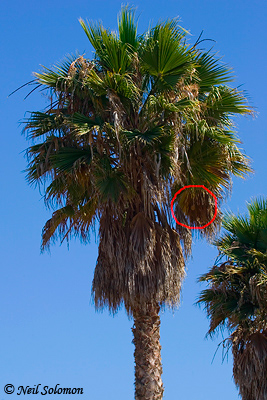
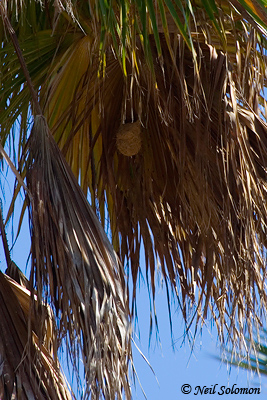
| Hooded Oriole
populations have been increasing in southern California. This may be
due in part to the widespread use of the Washington Fan Palm in urban
landscaping. This fan palm is the favorite nesting tree of the Hooded
Oriole in California. Hooded Orioles spend their Summers breeding in
California and then winter in Central and South America. |
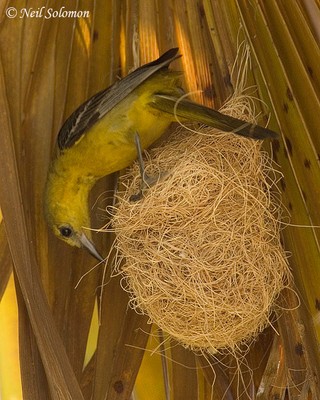
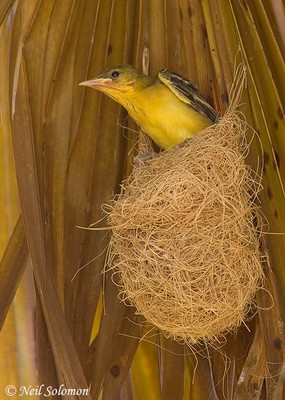
| Hooded Orioles sew
their nests to the underside of fan palm leaves. Only female orioles
build nests. The nests resemble hanging baskets and are usually woven
from the palm leaf fibers. The nest will usually be about 4 inches long
and be located from 5 to 45 feet above the ground. |
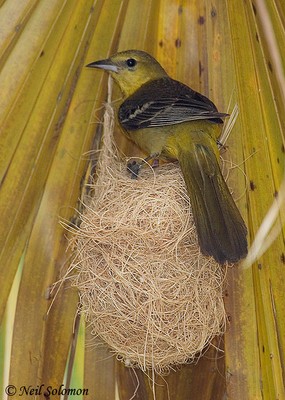
| Female Hooded Orioles
lay 3-5 eggs. Incubation of the eggs is done only by the female and
lasts 12-14 days. The babies are fed regurgitated food for the first
4-5
days and whole insects thereafter. The Male and Female take turns with
the feeding. |
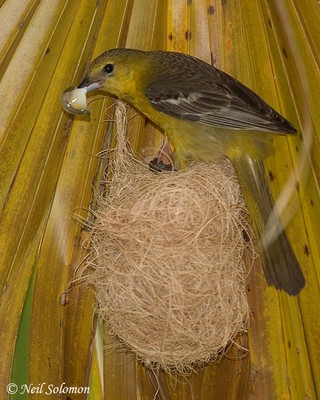
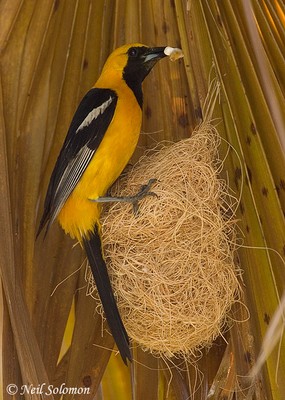
| Both Male and Female
take turns with the housekeeping chores by regularly removing fecal
sacs. |
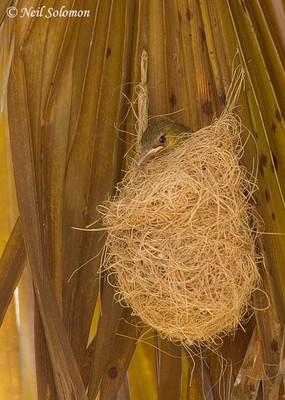
| After about 2 weeks the
babies begin to emerge from the nest and will soon fledge. |
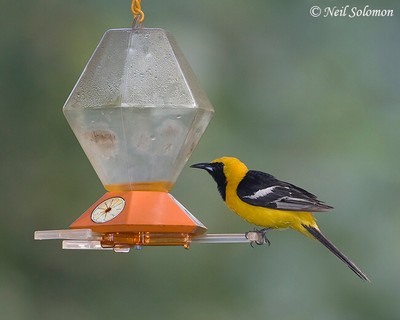
| Although insects
comprise a large part of the Hooded Oriole's diet, they will also
regularly use sugar water feeders. However, Hooded Orioles seem to be
very skittish around feeders and their visits tend to be brief. |
About What's New Gallery Order Links Photo Journal
Home