Great Gray Owl
Hunting Behavior
| In the winter of 2005 a Great Gray Owl irruption occurred in Northern Minnesota. Great Gray Owls in large numbers migrated south in search of food to sustain themselves through the winter months. The Great Gray Owl's main source of food consists of voles and other small rodents. In 2005, for reasons not well understood, there was a marked decline in the vole population in their northern hunting grounds in Canada. Owl irruptions of this kind have occurred in the past, but the number of Great Gray Owls migrating south this year was unprecedented. |
 |
In
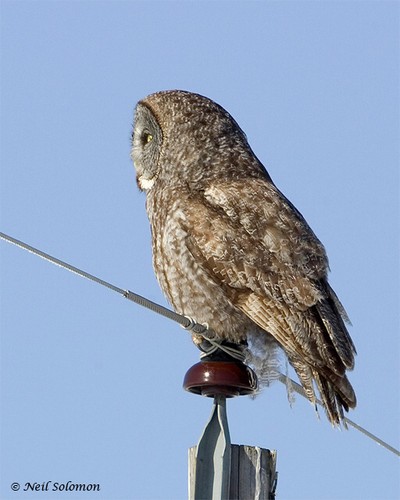
Northern Minnesota, the hunting grounds for the Great Gray Owl are the snow covered fields. Each morning, as the sun rises, Great Gray Owls can be found perched atop the telephone poles that run along these fields. Owls are known for the acuity of their eyesight. And, as they turn their heads from side to side, they appear to be closely watching the fields. However, looks are deceiving. In actuality, it is their ability to hear and find the voles beneath the snow covered fields that make their hunts successful. The disk shape of the owl's face helps collect sounds. The owl's ears (located beneath the feathers on the sides of the head) can detect minute differences in the time it takes for a sound to reach each ear. This enables the owl to triangulate on the sounds and pinpoint the location of the vole. |
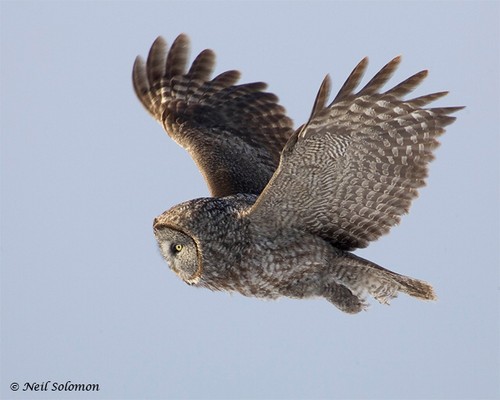 |
Once the vole is
located, the Great Gray Owl leaves its perch and launches itself directly towards the vole's location. |
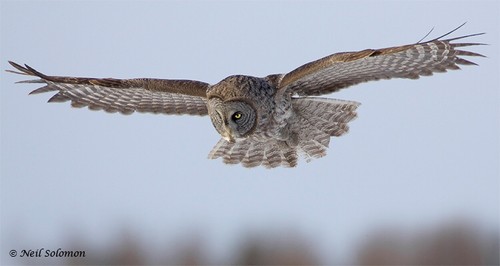 |
As the owl approaches
the location it begins to slowly glide, making last second adjustments based again on sound. |
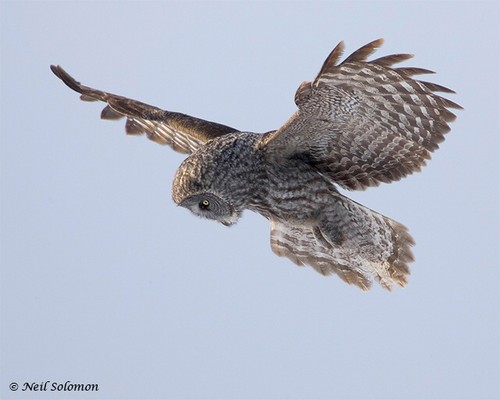 |
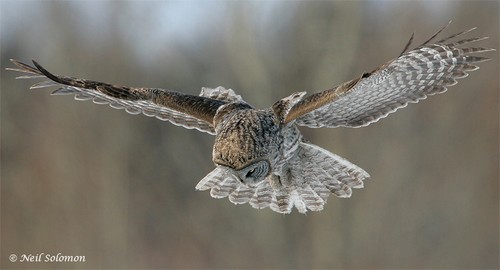
Once above the vole,
the
owl slows its glide even more and begins to hover. |
 |
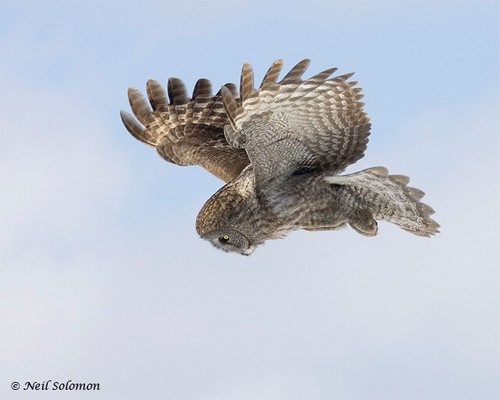
Seemingly hanging in
mid air the owl makes its final adjustment for the location of the vole. |
 |
Then, with a tilt of
its head... |
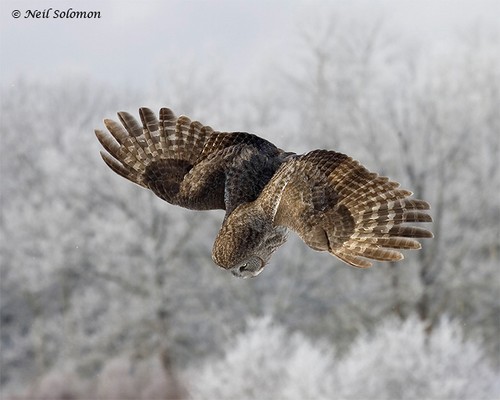 |
...the owl plummets
downward to crash through the crust of snow. |
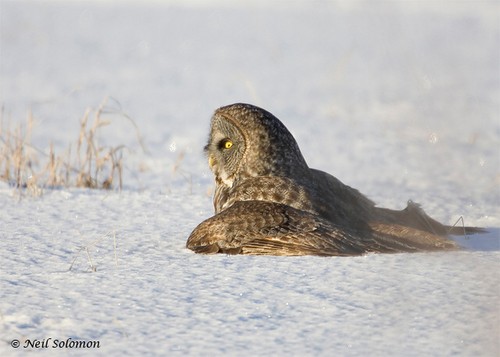 |
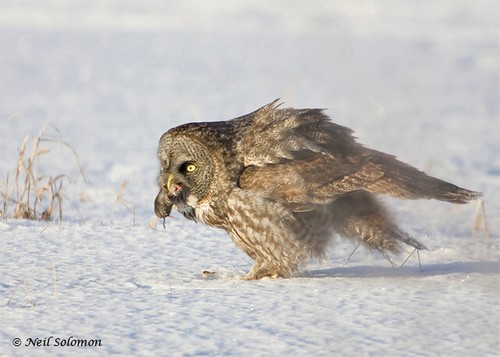
After striking its
prey, the owl sits with wings spread, sheltering it's catch. This is a behavior thought to discourage other owls from attempting to steal the catch. |
 |
After a brief
stillness, the owl plunges its bill into the snow, grabs the vole... |
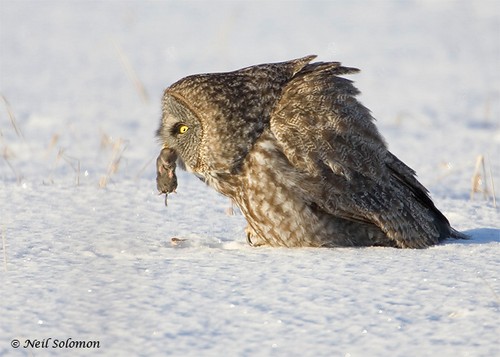 |
...quickly dispatches
the prey.... |
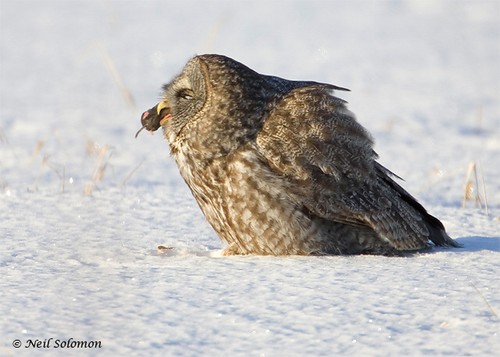 |
...and swallows it
whole
in one gulp. |
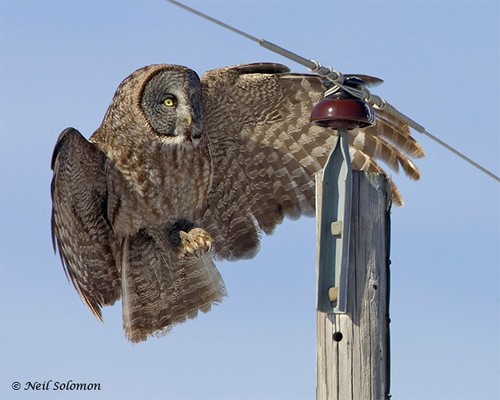 |
A moment later the
Great Gray Owl returns to its perch... |
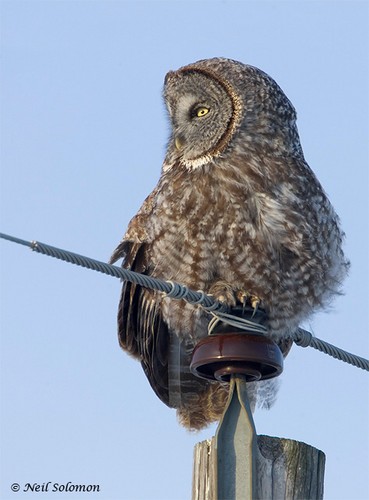 |
...and the vigilant
search for food begins again. During a three hour period, this particular Great Gray Owl left its' perch to hunt eight or nine times. The hunt was successful at least six or seven of those times. |
About What's New Gallery Order Links Photo Journal
Home