Cliff Swallows of Santee Lakes
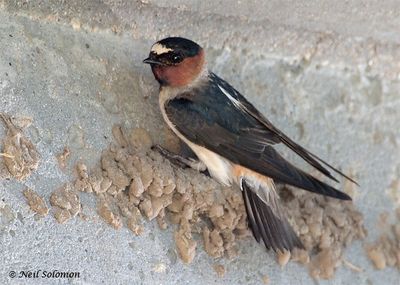
| The
Cliff
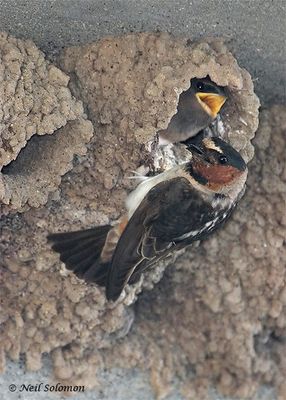
Swallow's most distinguishing
features are the black head cap, white forehead and the chestnut
coloring on the throat and side of the head. Wing tops and back are a
glossy blue-black. Both sexes look alike. Cliff Swallows spend their winters in Brazil, Paraguay, and Argentina. Feeding as they travel, the Spring arrival back in the breeding territory is known to be remarkably punctual. The best known arrival date is March 19, the day Cliff Swallows are said to return to the San Juan Capistrano Mission in Southern California. |
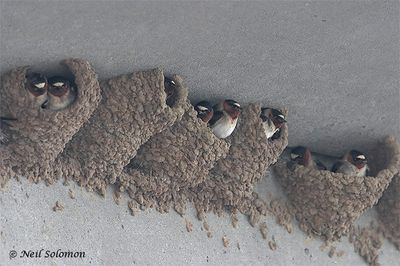
| Cliff Swallow
nests are located in
colonies averaging a few
hundred nests and ranging up to two or three thousand. This
particular colony at Santee Lakes is comprised of
a hundred or so nests. The nests are built side by side
under the overhang of the concrete Mast Blvd.
Bridge. |
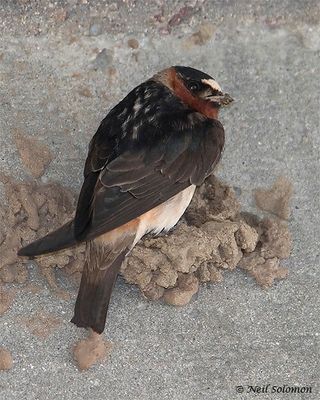
| Cliff Swallows build gourd shaped nests out of mud pellets they carry in their mouth to a nest site protected by an overhang. The male begins the nest as a shelf adhered to a vertical surface. |
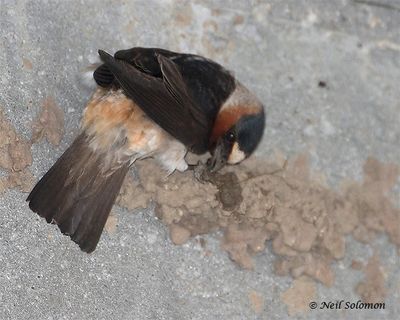
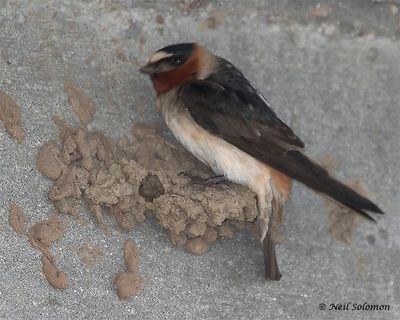
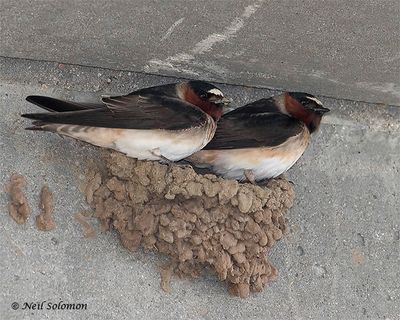
| As
the nest grows pellet by pellet,
both adults take part in the nest
building. |
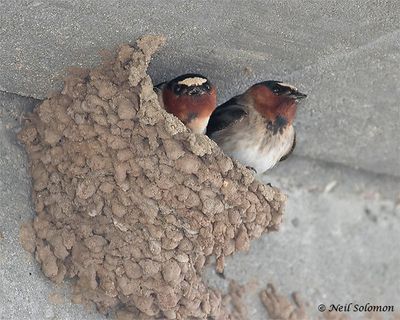
| The pair continues the construction by first building up the sides. |
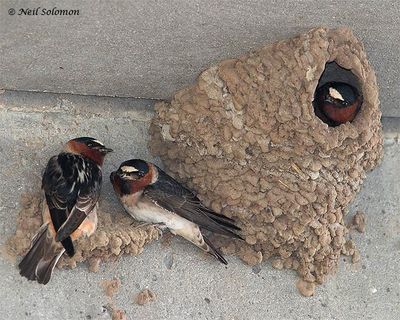
| And then bringing the the sides together to form the roof. The typical nest will contain approximately 1,000 mud pellets. |
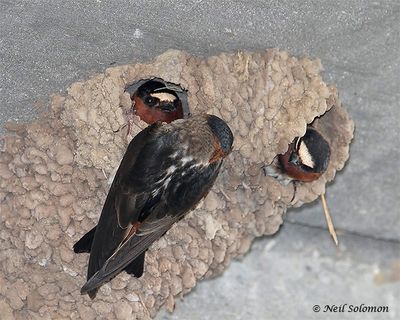
|
Sometimes
the nest will
have an
entrance tunnel up to eight inches in length that points down and away
from the other nests. Although Cliff Swallows are generally
monogamous, polygamy is not uncommon. This particular nest shown to the
right has two openings and appears to house two females. |
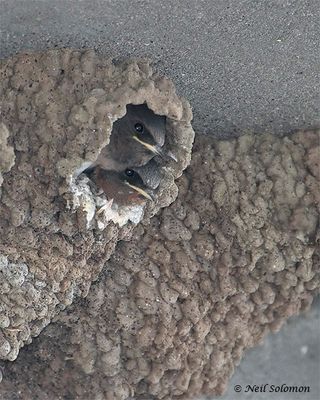
| The finished nest is lined with grasses and feathers and both male and female share in the incubation and feeding of the chicks. The average number of chicks is from three to five. The chicks appear to spend most of their time waitng for an adult to return to the nest with some tidbit. At times, swarms of adult Cliff Swallows move to and fro above the lake, snatching insects from the air and returning briefly to the nest to deliver the food to their chicks. |
The following series of photographs shows a feeding sequence over an elapsed time
of approximately five minutes:
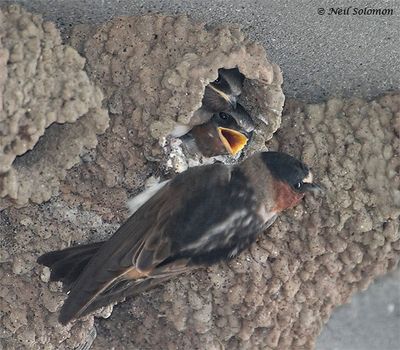
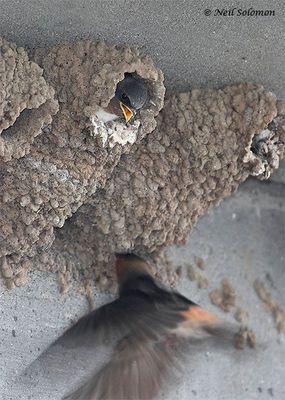
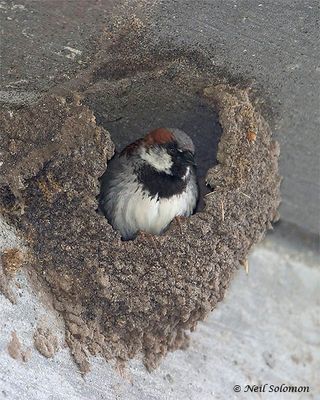
The
most
serious enemy of the Cliff Swallow is the English Sparrow, which
takes over the nest
and destroys the eggs found within.
and destroys the eggs found within.
| Cliff Swallows
typically raise two
to
three broods during the breeding season. After the final brood fledges
the Cliff Swallows will leave for their winter stay in South America,
and the cycle begins again. The photos shown in this Photo Journal entry were taken over an eight week period (April-May, 2004). This Cliff Swallow colony can be found under the Mast Blvd. bridge that spans Lake #2 at Santee Lakes Regional Park in Santee, California. |
About What's New Gallery Order Links Photo Journal
Home