Buster, the Yellow-eyed Penguin
Otago Peninsula, Dunedin, New Zealand
Making the Most of a Second Chance
| The Yellow-eyed Penguin is one of the
most, if not THE most endangered Penguin species
on the planet. The Yellow-eyed Penguin population has
significantly declined since the 1990s due to disease
and human activity. In addition, since these Penguins
spend most of their days at sea feeding, they must also
avoid predators such as sharks and sea lions. |
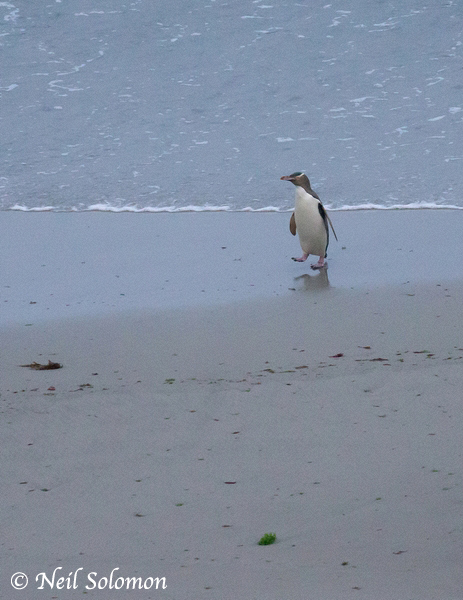 |
Two years ago, Buster was found on the
beach with injuries suffered in a shark attack. Taken to
the Penguin Hospital in Dunedin, Buster was nursed back
to health and released back on the beach where he was
found. Making the most of his second chance, Buster returned to his usual daily activities with only a limp to show for his near fatal experience. Then, last year it was discovered that Buster had found a mate and had successfully produced a chick. This series of photographs shows Buster returning from a day spent fishing at sea, to be greeted by his mate and chick. Emerging from the surf in the late afternoon, Buster checks that the beach is clear of predators. |
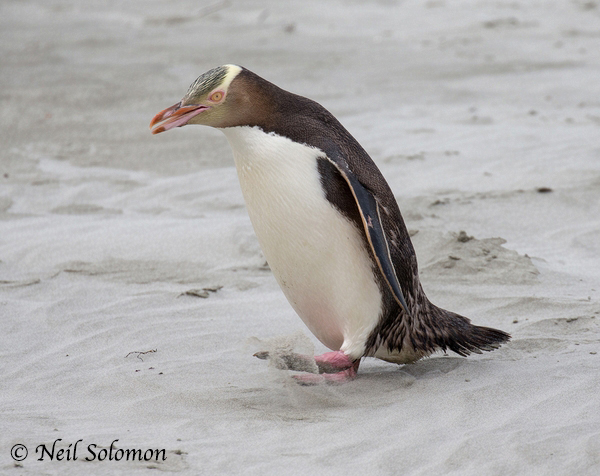 |
Buster
then crosses about 100 ft of beach (depending on tide
level). The beach and breeding habitat is part of
the Elm Wildlife Conservation Area. As such, access is
strictly controlled and Buster should only expect to see
gulls, sea lions and fur seals as he crosses the beach.
Hides for observing the activity on the beach are set in
the hillside above the beach. |
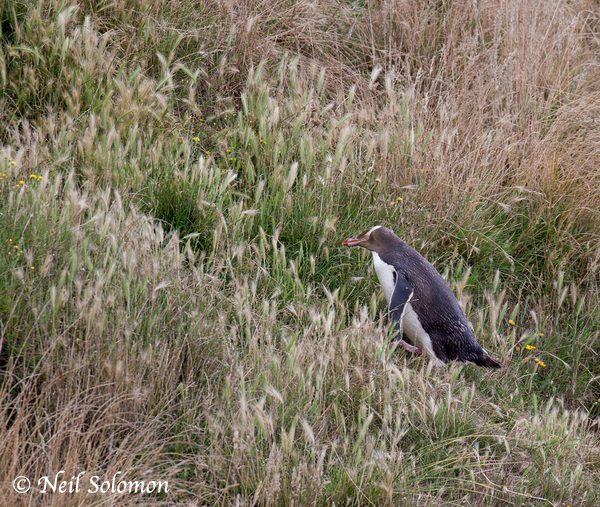 |
After
crossing the beach, Buster makes his way up the steep
path in the hillside that leads to his mate, chick and
burrow. |
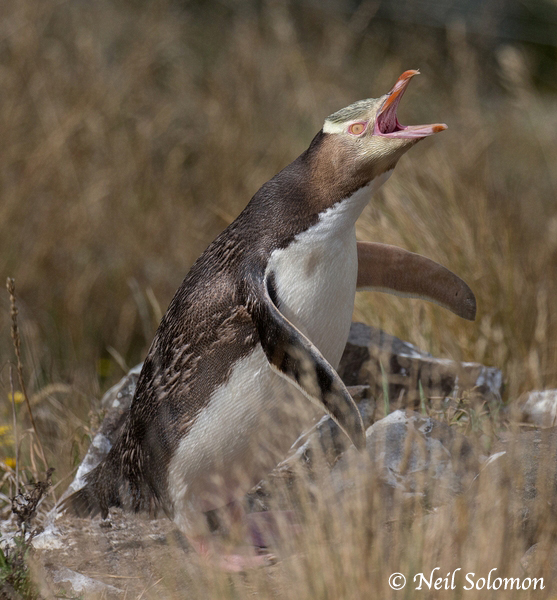 |
As
he approaches the burrow area, Buster vocalizes to let
his mate know that he has arrived. |
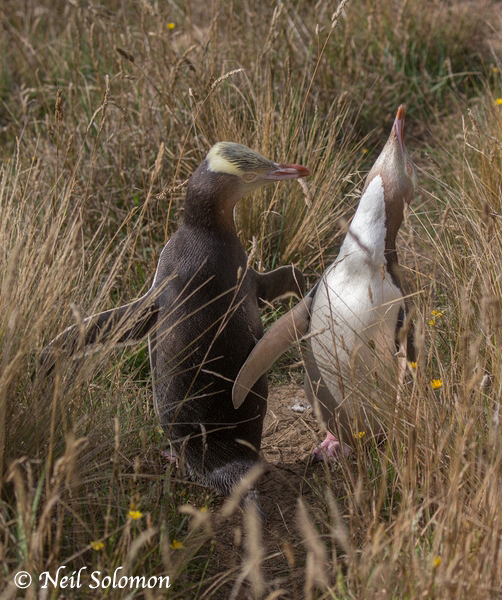 |
As
Buster continues to vocalize, his mate comes out to
greet him. |
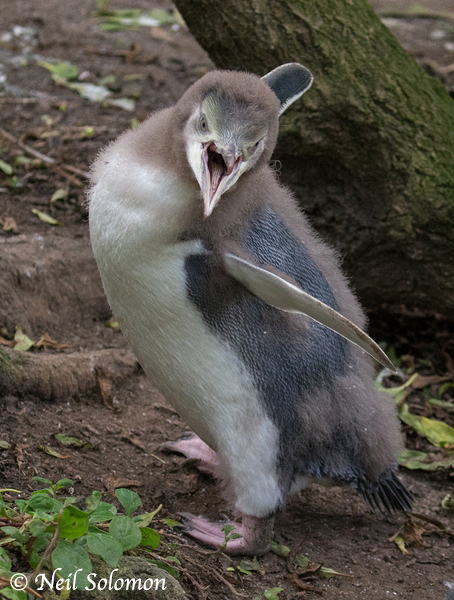 |
The
chick is happy to see Buster because it knows that
it is soon to be fed. Soon after Buster's return, his mate will descend the hillside path to also spend some time feeding on her own, leaving Buster to care for the chick. This sharing of activities will continue until the chick fledges. |
Home