Southern
California's Black-necked Stilts
|
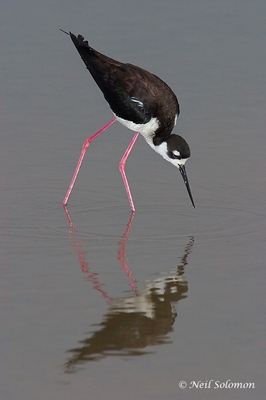
The
Black-necked Stilt is a tall black-and-white bird with very long, thin
red legs. Only Flamingos have legs that are longer in proportion
to their bodies.
The male and female Black-necked Stilt are similar in appearance, with the female having a brownish tint to the back and slightly shorter legs. Black-necked Stilts are found in fresh and saltwater wetlands. The breeding range for the Black-necked Stilt is scattered across the western and southern United States, south to Central America and west to Hawaii. The Stilt winters from the southern United States southward. |
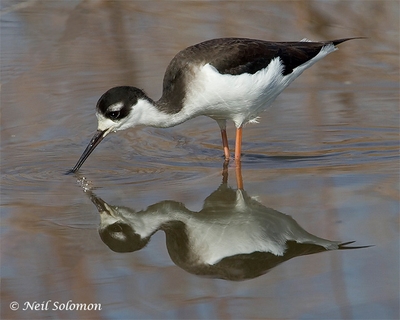
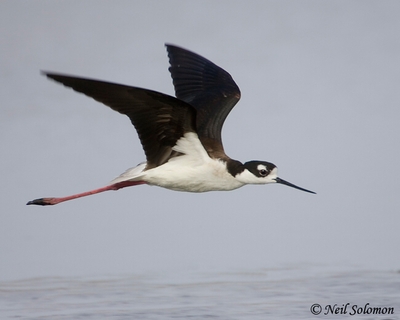
| Black-necked Stilts feed in shallow water,
while wading or swimming. Stilts are usually seen poking about,
moving their bills back and forth through the water, sometimes with
their heads completely submerged. Their primary food is
crustaceans and invertebrates. In flight, the legs of Black-necked Stilt trail behind. |
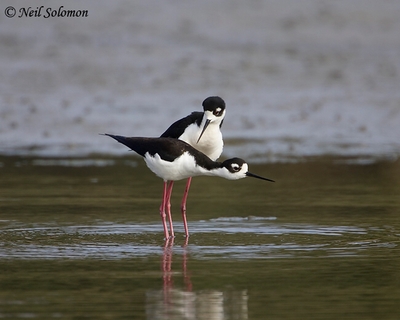
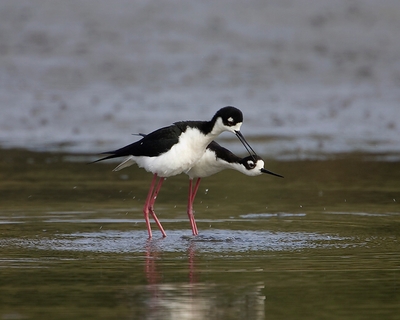
| The Black-necked Stilt mating ritual
begins with the female leaning forward and stretching her neck
out as a sign that she is ready and willing. The male then
circles her, pecking and flicking the surface of the water with
his bill. |
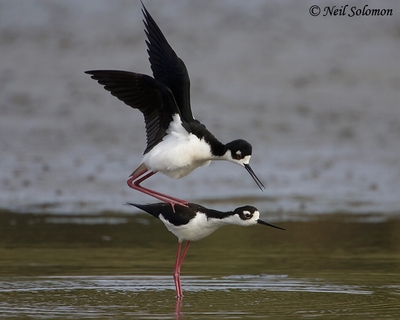
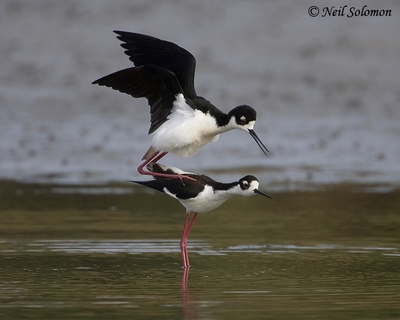
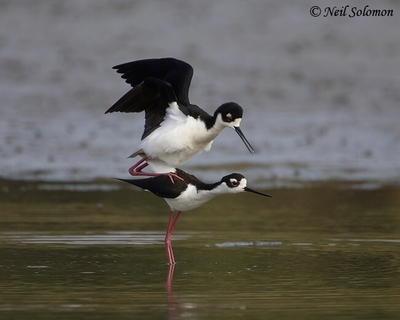
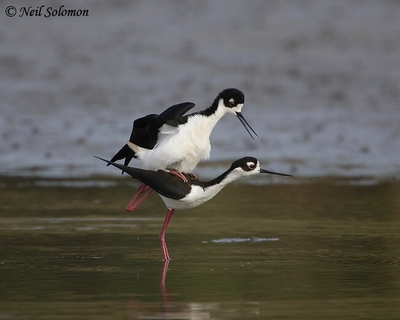
| The male than mounts the female and
copulation occurs in a quick flurry. |
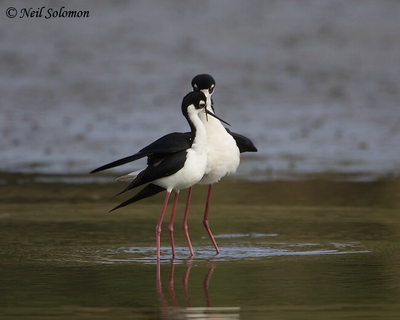
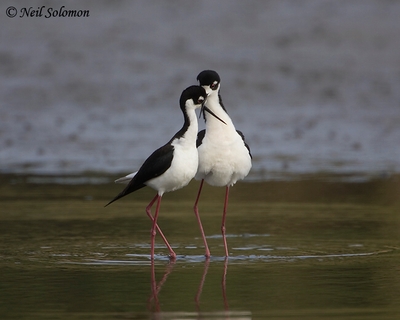
| Following copulation, the male will drape
his wing over the back of the female and they will walk a few steps
with crossed bills. |
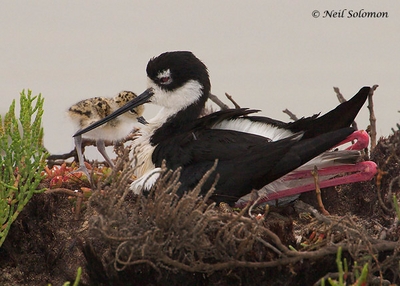
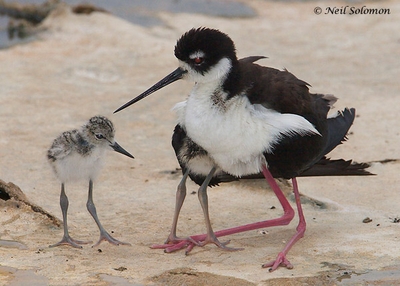
| Black-necked
Stilt nests are typically found close to the water's edge. The
typical clutch of 3-5 eggs is incubated for approximately three weeks
by both the male and female. New born chicks reside in the nest
for only about two days before venturing out on their own.
However, they quickly retreat to mother at the first sign
of trouble. |
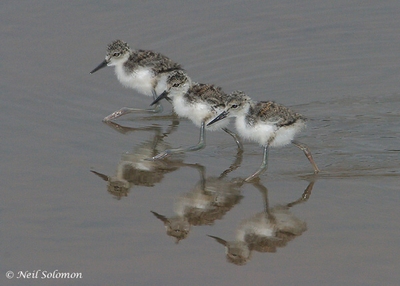
| Dashing
randomly through the shallow water, stilt chicks are difficult to
follow. Occasionally, however, there is that rare moment.... The above images were captured at Bolsa Chica, Huntington Beach, CA and Famosa Slough, San Diego, CA. |
Home